Creativity and problem-solving
The Box Is a Spaceship. What Else Could It Be?
Nookly Team · 5 min read
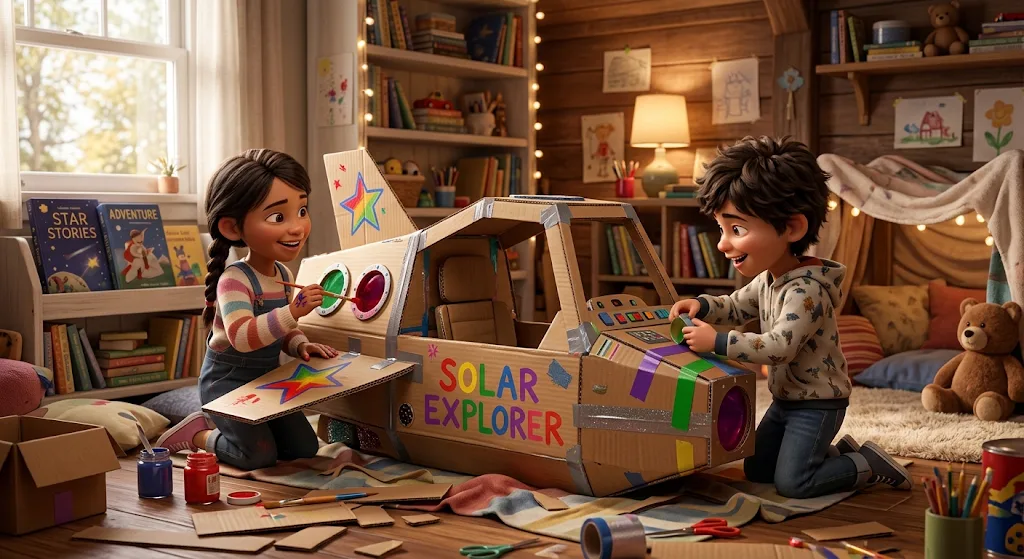
The delivery box sat on the living room floor for exactly four minutes before your daughter climbed in and declared it a spaceship. By lunchtime it had a control panel drawn in marker and a paper-plate steering wheel. By dinner, a wing had fallen off.
The next morning she stood looking at it. "What if it was a boat instead?" A day later it was a hamster hotel with three floors. The box is now mostly tape. It has also been the most creative thing in the house all week.
That second and third idea, the "what else could it be?", is where creative problem-solving really lives. The first idea is often the obvious one. The good stuff tends to come next.
Why the second idea matters
Children often grab the first idea that works, and that's fine. But when they're invited to keep going, they start combining, adapting and questioning. The spaceship's broken wing becomes a reason to rethink the whole thing. That's problem-solving: noticing a problem, trying something, and adjusting.
You don't have to teach this with a lesson. You can just ask, "What else could it be?" and wait. The waiting is the hard part.
Some children get a first idea and want to stick with it forever. That's fine as well. You can invite a second idea without pushing: "This is great. If you made another one, what would you change?"
Constraints make room for options
It sounds backwards, but limits often spark more ideas than a blank slate. "Make anything" can be paralysing. "Make something that holds a toy and floats in the bath, using only this box, tape and three straws" gives a child something to push against.
Try small constraints. Only one color. Only things from the recycling bin. It has to fit through the door. It has to carry a teddy to the kitchen. Each constraint closes one door and opens a few new ones.
For younger kids, around two or three, keep the constraint gentle and physical: "Can teddy fit inside?" For five- and six-year-olds, add a job: "It needs to carry something." For eight- and nine-year-olds, add a real challenge: a budget of materials, a time limit, or a design that has to work twice in a row.
A quick example of constraints at work: your son wants to build a car. You add one rule, "It has to carry two eggs without breaking them." Suddenly he's thinking about padding, balance and brakes. The same box, the same tape, a much more interesting problem.
Let them choose
The single most important thing is that the child decides. Which idea to try, which material to use, where the door goes. Your job is to offer, ask and supply tape. It's tempting to say, "Oh, the wheels should go here." Try to hold that thought. If the wheels end up on the roof, that's a design decision, and maybe a funny one.
You can offer options without choosing: "Would you like to try the straws or the lolly sticks?" You can ask about their thinking: "Why did you put the door there?" But the design is theirs.
Sometimes a child's choice will clearly not work. The bridge is made of paper, the hotel has no floor. It's okay to let them find out. If they're about to get very upset, you can ask a question that points gently: "What do you think will happen when the car drives on it?" Then let them decide whether to change it.
Let them test it
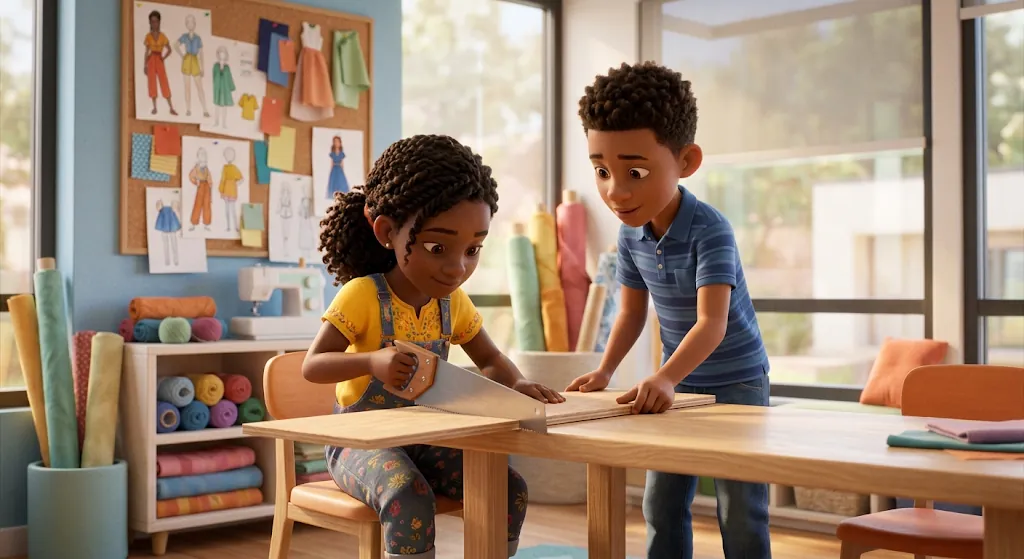
Creative problem-solving has a testing step. Does the boat float? Does the hotel stand up? Does the bridge hold a toy car? Let them find out.
When something fails, it's tempting to fix it. Resist that. Instead, ask, "What happened? What could you try?" Kids learn more from working out why the boat sank than from having an adult quietly add more tape. And when it works on the third try, the win is completely theirs.
Keep a little "invention notebook" nearby. After a test, your child can draw what they made and write or say one thing that went wrong and one thing they'd try. Over time, the notebook becomes a record of their thinking. It's also a lovely thing to look back on together, full of spaceships, hotels and wildly ambitious bridges.
No scores, no grades
There's no need to judge creativity. A child's box hotel isn't more or less creative than their friend's rocket. Scoring ideas can make kids play it safe. Instead, be curious. "Tell me about this part." "What was the hardest bit?" "What would you change next time?"
And, honestly, not every creative moment needs an activity at all. Sometimes the best thing is a box, a quiet afternoon, and not being interrupted.
It helps to name the skills without making them feel like homework. "You noticed the problem, tried a new idea and tested it. That's what engineers do." Kids light up at that kind of recognition, because it's about what they did, not how clever they are. And it leaves room for the next attempt, which might fail spectacularly, and that's fine too.
Siblings of different ages can share the same box. The toddler decorates, the five-year-old designs the door, the nine-year-old works out how to make it roll.
Where Nookly can help
Nookly can help you, the adult, make invitations. Think of these as small challenge cards or stories that spark a new direction when your child has run out of ideas, built around what they love and the materials you actually have.
You might ask: "My six-year-old loves space and her hamster. We have a big box, tape, straws, paper plates and markers. Make five challenge cards that each suggest a different thing the box could become, with a small constraint on each, and a short story about an inventor hamster to read first." Your child picks a card, or ignores them all and invents something else. Either way, she's the designer.
You can do this as a one-off experience, or set up a personalized learning plan called a Blueprint for an ongoing Goal, a finite plan, maybe one making challenge each weekend with a little invention journal. You review everything first, and you're free to drop anything that feels like too much direction.
Keep an eye on frustration. Challenges should stretch, not crush. If a constraint makes your child miserable, drop it.
A request you might write
"My eight-year-old likes building bridges with lolly sticks but always gives up when they collapse. Make three bridge challenges using lolly sticks, tape and a toy car, each with a different constraint, plus a 'what went wrong?' sheet he can use after each test." Read it, gather the sticks, and step back.
This week: ask twice
Next time your child makes something, ask, "What else could it be?" Then wait. When they answer, ask again. See where the third idea goes.
From the Neighborhood