Small Traditions, Big Questions: Celebrating With Kids Through the Year
Nookly Team · 5 min read
Every family has a small thing it does without thinking. You tap the door frame on the way out on the first day of the year. You save the last piece of bread for whoever's coming late. You always sing the same slightly wrong version of a song. And one day, a child stops and asks, "Why do we do that?"
Nobody quite knows. Someone thinks Grandpa started it. Someone else is sure it was a great-aunt. The answer, when it's pieced together, turns out to be a story. And stories, especially true family ones, are some of the best things to learn from.
Celebrations are full of questions
Children meet celebrations with their whole selves. They notice what's different: the food, the clothes, the visitors, the late bedtimes, the words people say that they don't say on other days. Each difference is a small invitation to ask.
That makes celebrations a natural place for learning, as long as the learning follows the family rather than a template. Two families who celebrate the same occasion might do it in very different ways. One family may mark an occasion religiously, another culturally, another with a quiet meal and nothing else. And many families don't celebrate a given occasion at all.
Early childhood educators often talk about this difference directly: learning about a celebration is not the same as assuming everyone celebrates it, or celebrates it the same way (NAEYC). That's a useful principle at home, too, especially when children start asking about their friends' traditions as well as their own.
A year of small doors
Here's what that can look like across a year, without turning it into a holiday encyclopedia. The dates move around depending on the calendar your family uses; what matters is the moment, not the square on the calendar.
A family that stays up for New Year's might ask a child to draw five things they're proud of before the countdown. Another family celebrates the new year on a different calendar entirely, and that's the one that belongs in their child's drawings. On Halloween, a child who loves costumes but finds the spooky decorations scary might sort pictures of the street into "friendly" and "spooky" before heading out, or the family might skip it altogether.
During Hanukkah, a child might keep a simple counting page, adding one after each night's candle lighting with a grandparent. Before Passover, a child who is going to ask a question at the family seder might want to practice, and to see a picture guide of what will be on their own family's table. For Christmas, a family celebrating across two households might make a visual plan showing who they'll see and where the quiet corners are. At Easter, some families focus on a church service, some on a spring egg hunt, some on both, and a picture-clue hunt at home can sit alongside whatever else they do.
Ramadan is a whole month, not a single day, and a child who isn't fasting might still want to help set the table for iftar or choose a kindness to do each day. Eid al-Fitr marks the end of that month, often with visits and greetings to practice. Eid al-Adha is a separate celebration with its own meaning, and many families talk with children about sharing with others. For Diwali, a child might plan a rangoli design on paper before drawing it with a grandparent. At Lunar New Year, a child might practice greetings for visiting relatives and ask about the customs their own family keeps. And birthdays, of course, are everyone's, and a six-year-old planning their own party games is doing real planning.
None of those examples is the "right" way. They're simply what those families do.
Ask the people who remember
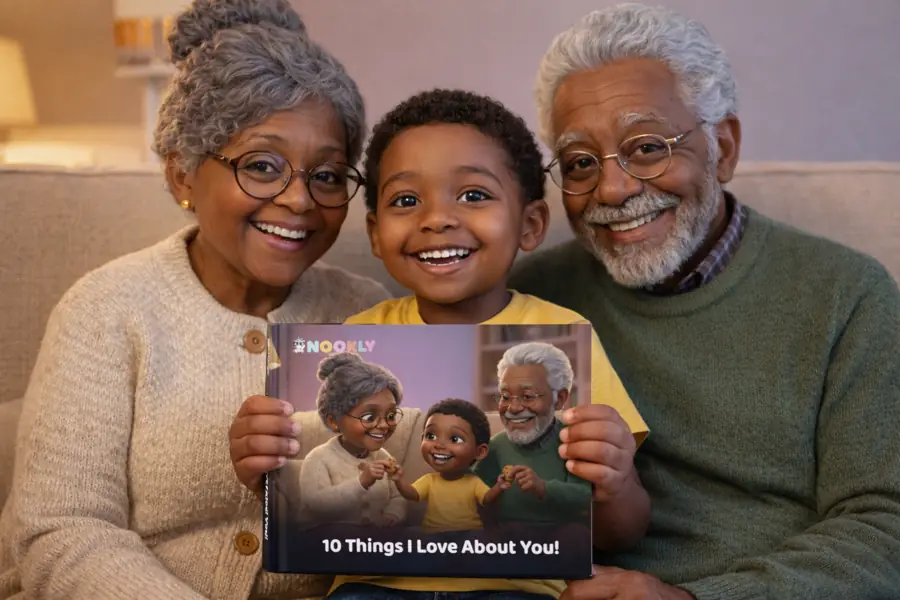
The best source for your family's traditions is usually a person. A grandparent, an aunt, an older cousin, a neighbor from your community, a faith leader if that's part of your family's life. They remember the first time, the version from another country, the year it went wrong.
A simple family interview helps children collect those memories. Keep it short and friendly:
- What did you do for this when you were my age?
- Who taught you?
- What's one thing that's different now?
- What do you hope I remember?
Ask before sharing a relative's memories or photos beyond the family. And when an answer involves faith or meaning, let that person explain it in their own words.
Making, preparing and welcoming
Many celebrations involve getting ready, and that's a gift for young children who like to know what comes next. A simple picture sequence ("clean, cook, dress, welcome, eat") can make a busy day feel safer for a toddler. A five- or six-year-old might help write a welcome message for guests: "Welcome to our house. We are happy you came." An eight- or nine-year-old can take real responsibility for one part, like planning a dish, making cards or keeping a timeline of the day.
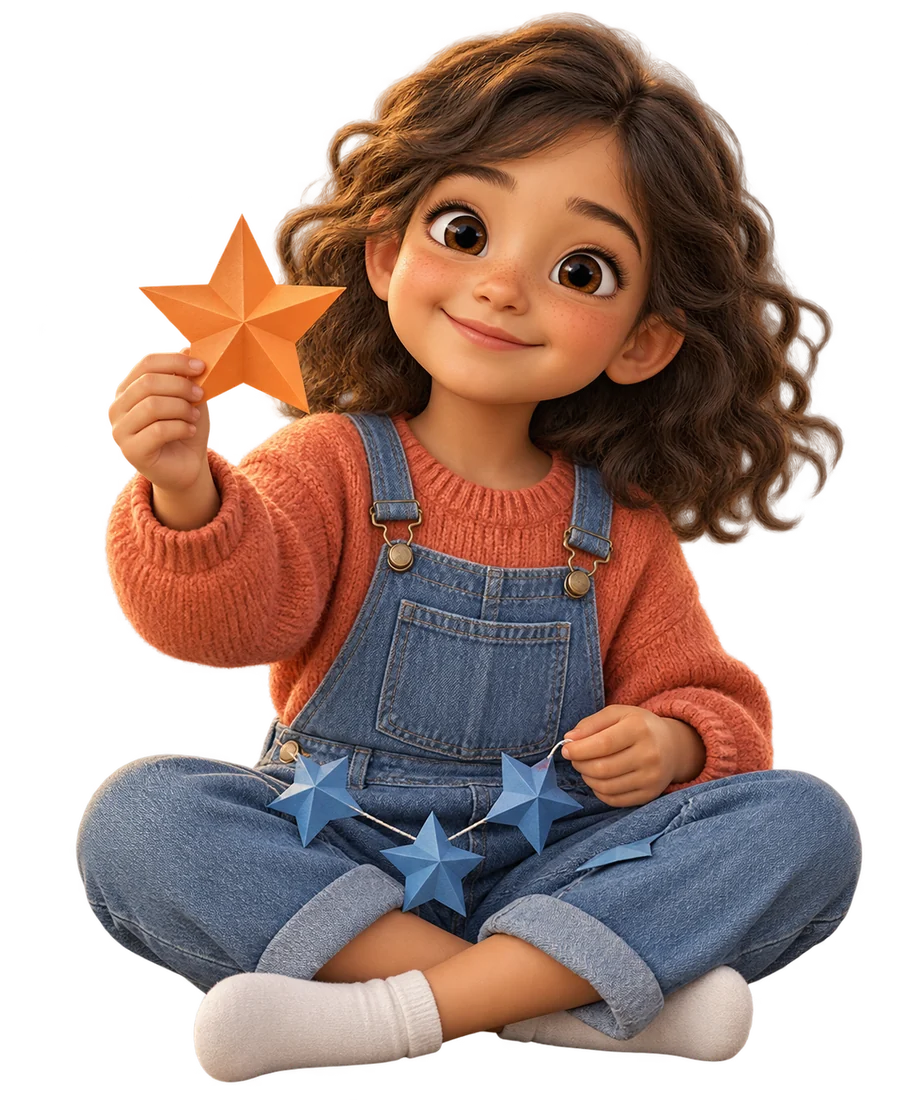
Making things by hand fits almost every tradition: cards, paper stars, decorations, food, small gifts for someone who'd like to be included. It's also a way to keep learning grounded in what your family actually does, rather than a collage of symbols from different traditions stuck together. Sacred rituals are best left to the family and community who practice them; children can learn about them without imitating them as a craft.
Children also like to know that their own way of doing things counts. Invite them to add a small, harmless detail of their own: a new song for tidying up, a drawing for the front door, a job they invent. Traditions have always changed a little as they're handed down, and a child who contributes one small piece often feels the whole thing belongs to them.
Where Nookly fits
Nookly can help with the preparation. You describe your family's version, and Nookly creates something to use around it. For example: "We celebrate Diwali with my mother, who draws rangoli with the kids. My five-year-old wants to design his own. Make a planning grid he can color first, a short story about drawing with his Nani, and a matching game with lamps."
Nookly works from the context you share. It doesn't assume what your family believes or celebrates, and it doesn't blend traditions unless you ask. Review anything factual it includes, especially about religious meaning, and correct it with your own family's understanding or a trusted source.
For a single occasion, one creation on demand is often enough. If there's something you want to build over time, such as "feels confident greeting relatives," you can set a Goal and Nookly creates a finite personalized learning plan, called a Blueprint.
One question to take home
Before your next celebration, whatever it is, try asking one question at the table: "What's something we do that you've always wondered about?" Then find the person who knows. Write down what they say. That's the start of your family's story, and it belongs to you.
Sources checked September 26, 2026: NAEYC: Holidays in a diverse world. Nookly isn't affiliated with or endorsed by the organizations named.
From the Neighborhood
Try a ready-made bundle
Passover for Kids: Questions at Our SederBuilt around asking questions at a family celebration, the heart of this article.View bundle- Diwali for Kids: Learn About Rangoli and Make a Pattern — A making activity for the festival of lights.
- Lunar New Year Traditions for Kids — Red envelopes and dragons, told through a story.