The Puddle Is the Lesson: Nature-Based Learning for Curious Kids
Nookly Team · 5 min read
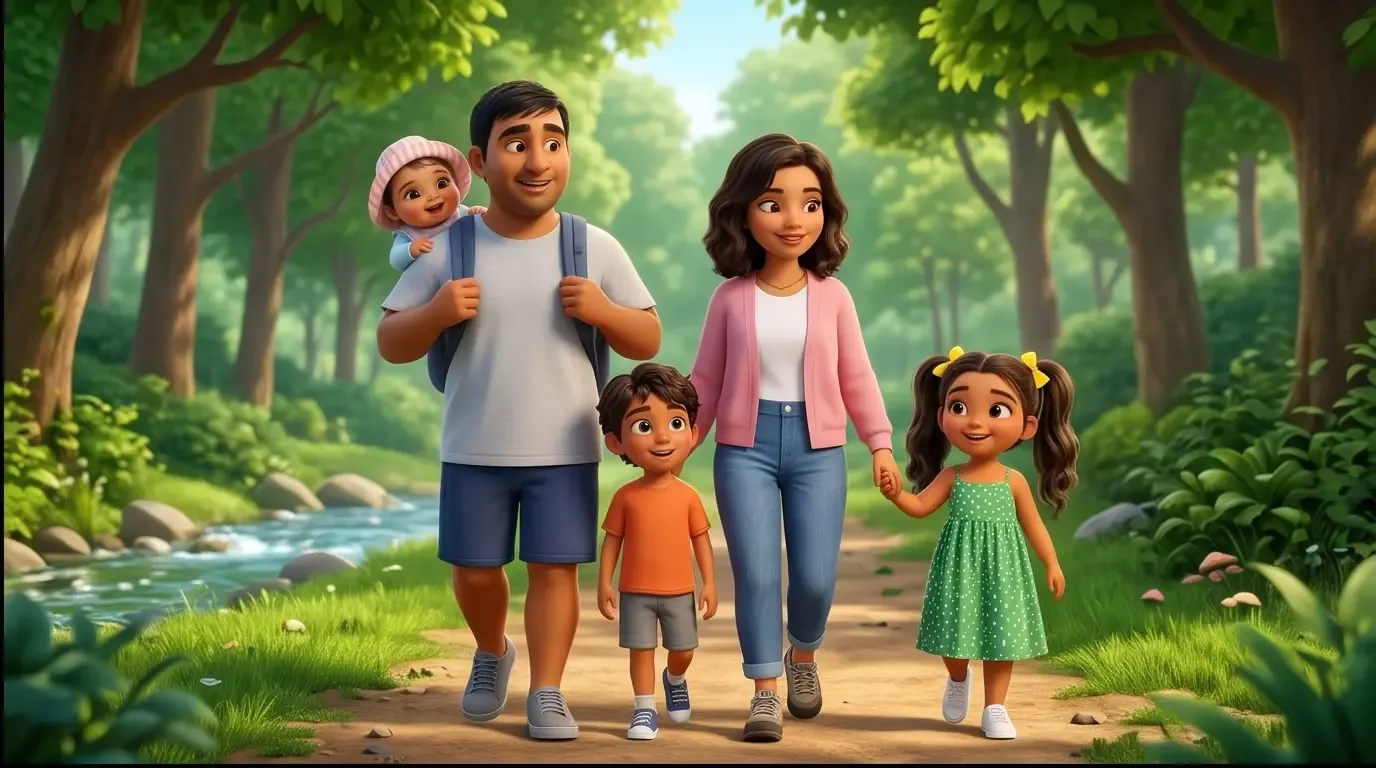
You have eleven minutes to get to the dentist. Your son has found a puddle. Not an ordinary puddle, he explains, but one with a rainbow in it, and he needs to know whether the rainbow is inside the water or on top of it. He is crouching. He is not moving. This is, as far as he's concerned, urgent research.
Sometimes the dentist really does win. But if you've ever wished that moment could turn into something instead of a tug of war, nature-based learning has a simple answer: the puddle is the lesson. You just need a way to come back to it.
Notice, ask, revisit
Nature learning doesn't have to start with a plan. It often starts with a child noticing something you walked straight past. The job of the adult is small but important: help them notice more carefully, help them ask a question, and make sure they get to return.
Returning is the part that's easiest to forget. A single visit gives you a moment. Coming back to the same spot tomorrow, or next week, gives you evidence. Is the puddle smaller? Has the rainbow gone? Did the leaf pile get bigger after the wind? Children become observers when they can compare then and now.
Groups like Project Learning Tree share family activities built on exactly this kind of close looking and journaling. You don't need a special program to start, though. You need a spot, a question and a reason to come back.
Wonder starts close to home
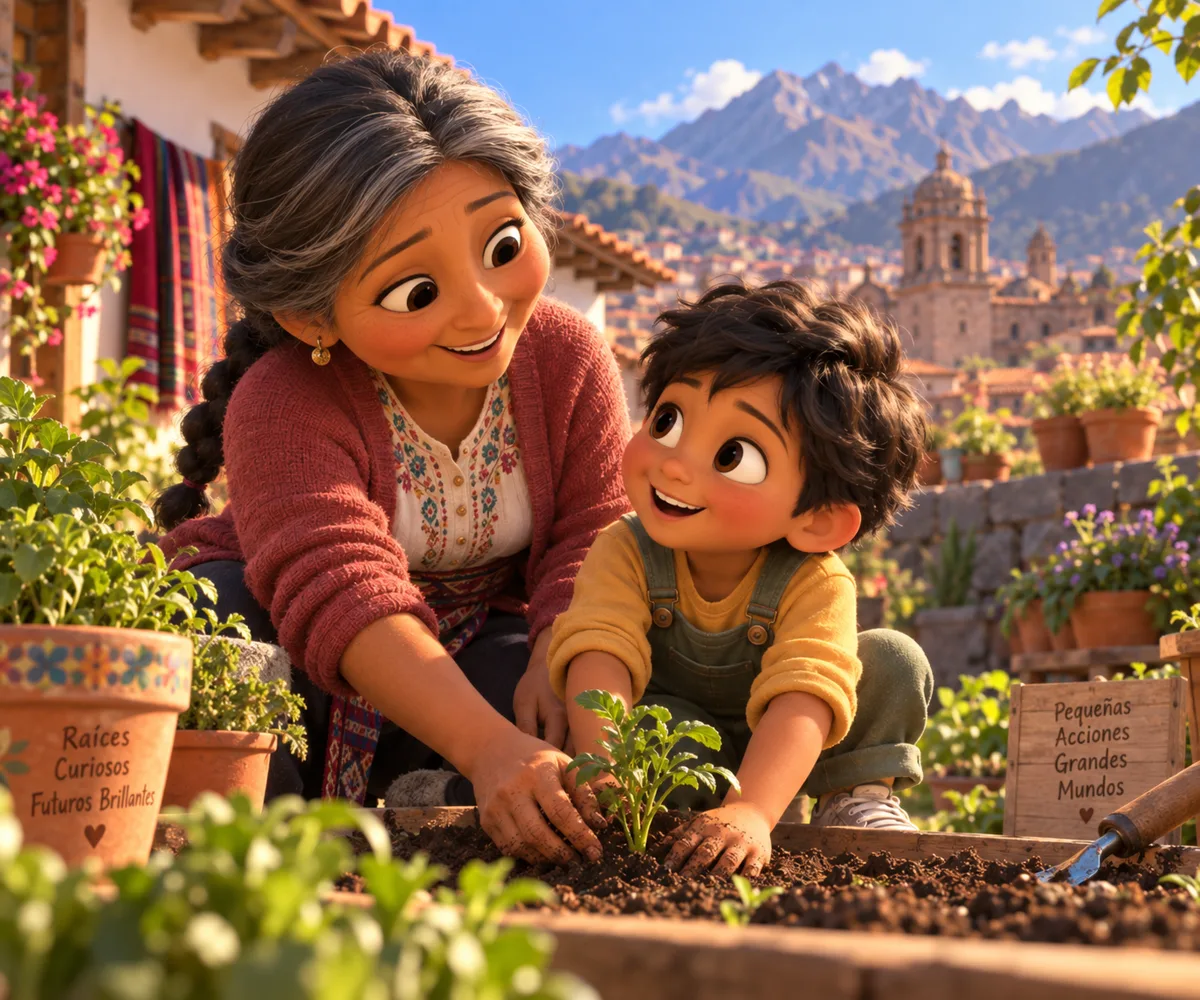
Many families quietly assume nature learning is for people with gardens, forests or weekends in the countryside. It isn't. A window counts. So does a courtyard, a balcony, a strip of grass by the bus stop, an accessible path through the park, or a single plant pot on the kitchen step.
What matters is that the place is yours to revisit. The pigeons on a neighboring roof, the moss between paving stones and the way light moves across the floor in the afternoon are all real things to observe. A child who notices those carefully is doing nature-based learning, even in a sixth-floor apartment.
A five-minute observation invitation
Here is a short invitation you can use almost anywhere. It takes about five minutes and needs only a pencil and paper.
- Pick one thing. One puddle, one tree, one plant, one patch of sky.
- Look for a slow minute. No talking. Just looking.
- Draw or describe three details. A color, a shape and something that surprised you.
- Ask one "I wonder" question. "I wonder where the water goes." "I wonder why this leaf has holes."
- Make a plan to return. Write the day and time you'll check again.
On the return visit, repeat the same steps and put the two pages side by side. What changed? What stayed the same? What new question showed up? This is how a puddle becomes a small study rather than a delay.
While you're there, keep the usual outing sense you'd bring to any walk at that age: stay close to younger children near water or roads, and leave plants, nests and creatures as you found them. Look, sketch and count; you don't need to collect.
Keep the pages together in one folder or envelope. After a month, spread them on the floor and read them as a set. Children are often amazed at how much they noticed, and how their drawings and questions changed along the way.
Three ages, three kinds of looking
Around two or three, noticing is mostly naming and moving. Try leaf noticing on the way to the shop: big or small, bumpy or smooth, green or brown. Say the words together, crunch a dry leaf, float a leaf in a puddle. Short and repeated is perfect.
Around five or six, children love to predict. Chalk around the edge of a puddle in the morning and ask, "Will it be bigger or smaller by lunch?" Check together. Try a sunny puddle and a shady one. Draw both and compare. The water cycle becomes something they've seen rather than something they've been told.
Around eight or nine, kids can handle a small investigation over time. Choose one patch (a corner of the park, a flower bed, a balcony planter) and keep a habitat tally for a week: how many birds, bees, ants or snails you see in five minutes each day. Keep notes on weather and time. At the end, look at the evidence and ask what it does and doesn't tell you.
When it's raining, or everyone's tired
Some days nobody wants to go anywhere, and that's allowed. Nature learning can shrink to fit. Put a cup outside the window to catch rain and measure it at bedtime. Watch how a drop runs down the glass, and race two drops against each other. Draw the view from the same window every Monday for a month and compare the pages. Bring one leaf inside and look at it with a magnifying glass, or just very close eyes.
These small versions still use the same three steps: notice, ask, revisit. They also keep the habit alive until the next properly muddy day. Children don't need a big expedition to feel like scientists. They need someone who takes their observation seriously and says, "Let's check again tomorrow."
Where Nookly fits (and where it doesn't)
Getting outside is the real activity. A screen can help before or after, never instead. Nookly is useful for the preparation: turning your child's actual question into a set of question cards, an observation printable or a short story to read after the walk.
A request might look like this: "My six-year-old keeps asking where puddles go. We have a small courtyard. Make a puddle prediction sheet with room for two drawings, three question cards to take outside, and a short story about a puddle that disappears." Nookly uses that context to create a small set of pieces. You check them, print what's useful, and head out.
Two things Nookly doesn't do: it isn't a wildlife-identification authority, and it shouldn't be used to decide whether a plant, mushroom or berry is safe to touch or eat. For that, use a trusted local guide. The observations your child makes are the evidence. Nookly just helps you organize the questions around them.
If the interest sticks, you can set a Goal such as "notices and describes changes in nature," and Nookly creates a finite personalized learning plan, called a Blueprint. For a one-off puddle morning, a single on-demand creation is plenty.
Back to the puddle
You did make the dentist, just about. But on the way home, you stop at the same puddle. It's smaller. The rainbow has gone. Your son is outraged, then fascinated. "Where did it go?" he asks.
That's tomorrow's question. Write it down. Chalk the edge. Come back.
Sources checked September 26, 2026: Project Learning Tree: nature activities for families. Nookly isn't affiliated with or endorsed by the organizations named.
From the Neighborhood