The “I Can Do It” Years: Montessori-Inspired Learning at Home
Nookly Team · 5 min read
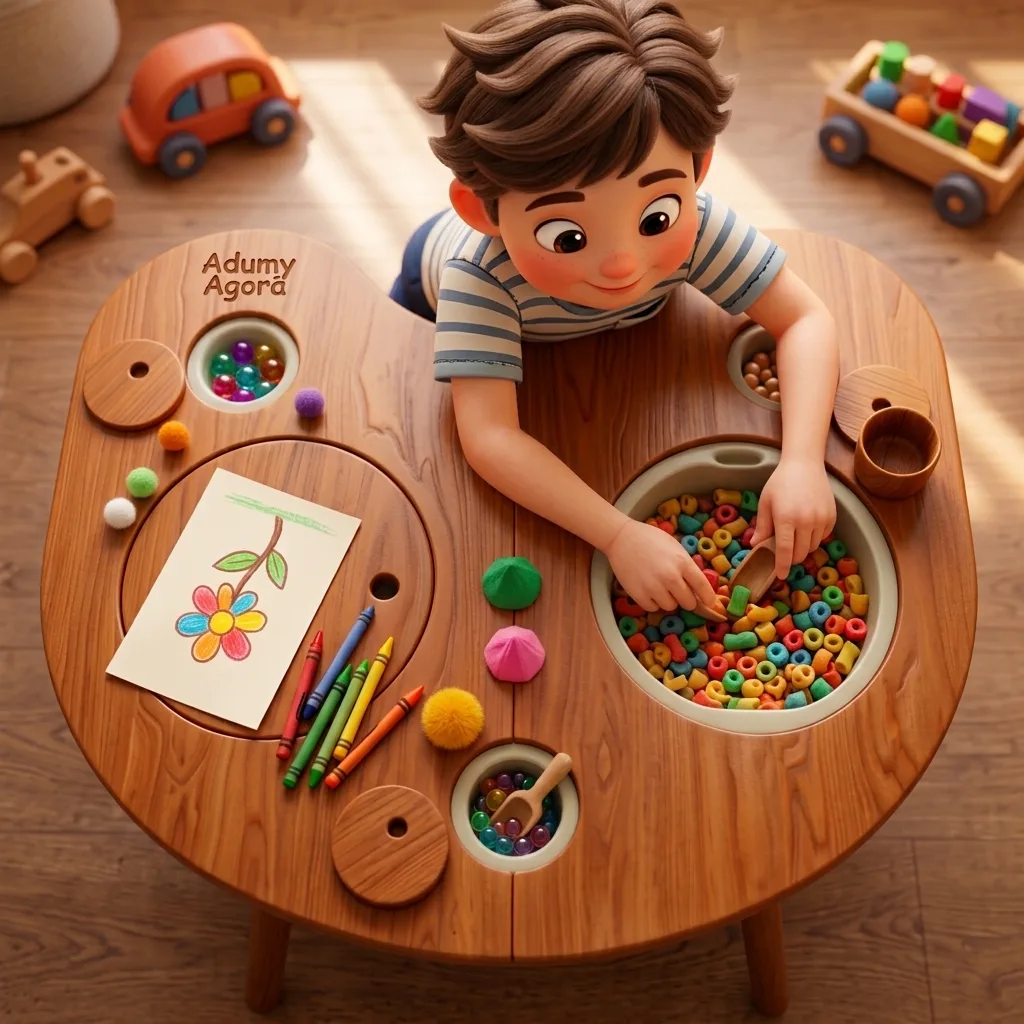
Your two-year-old wants to pour her own water. Not with help. Not with a lid. From the big jug, into the small cup, by herself. You say yes, and quietly count how many towels are in the drawer.
If that scene feels familiar, you're living through what many parents call the "I can do it" years. Children want to do real things with real objects, and they want to do them without you taking over. Montessori-inspired ideas can help you say yes more often, with a little preparation and fewer towels.
Inspired, not the full method
First, an honest distinction. Montessori education, as practiced in schools, involves trained teachers, a carefully prepared environment and specific materials designed for the method (American Montessori Society). That training matters.
What families do at home is usually Montessori-inspired: borrowing some of the principles, especially around independence and everyday tasks, without claiming to recreate a classroom. That's a perfectly good thing to do. It just helps to be clear about what it is.
That said, you don't need training to notice that your child wants to help, or to make a real task a little easier to reach. The home version is gentler and simpler, and it can sit alongside whatever else your family does, whether that's a Montessori school, a different preschool, homeschooling or none of the above. What matters is the attitude underneath: trusting that children are capable, and giving them a fair chance to show it.
Watch before you plan
The American Montessori Society's guidance for families encourages adults to observe, prepare, model and adapt, with everyday practical-life work at the center. In plain terms: before deciding what your child should do, spend a few minutes watching what they're already trying to do.
Maybe she keeps climbing onto a chair to reach the tap. Maybe he's always pulling cloths out of the basket. Maybe she follows you around while you water plants. Those are clues. They tell you where her attention is, and what kind of real work she's reaching for.
Observation also helps you notice the size of the step she's ready for. Pouring from a huge jug might be too much, but pouring from a small pitcher into a cup on a tray might be just right.
Prepare a little, then step back
Preparation is mostly practical, and it's the adult's job:
- Offer manageable choices. "Would you like to pour water or pour rice?" is easier than an open shelf of ten options.
- Make things reachable. A low shelf, a small pitcher, a cloth that lives where she can find it.
- Model slowly, with few words. Show the pouring once, carefully, without a running commentary. Let her watch your hands.
- Let practice be practice. Spills are part of it. The cloth is part of the activity, not the punishment for it.
Then step back. It's surprisingly hard. The urge to fix, straighten or finish is strong. But the pride in "I did it" only comes if she really did.

Three ages, three real tasks
Around two or three, try sorting cloths. A small basket of washcloths and tea towels, sorted by size or color, then folded (roughly) and put away in a low drawer. Add wiping the table with a small damp cloth after snack. These tasks are short, repeatable and genuinely useful.
Around five or six, try setting the table. Count how many people are eating. Carry plates one at a time. Place forks, cups and napkins. A simple place-setting map at first, with your own plates and cups drawn in, helps until she no longer needs it. This is real family work, and she'll know it.
Around eight or nine, try a small container garden. Choose a pot, soil and something that grows reasonably quickly. Let him plan where it goes, how often to water and how to keep track. Measure the seedling every few days. When something wilts, don't rush in; ask what he thinks happened. That's responsibility, science and patience in one pot.
When it doesn't go smoothly
Some days the pitcher tips over on the first try. Some days she refuses to wipe up, or pours the water onto the floor on purpose to see what happens. That's not failure; it's information. Maybe the pitcher is too full. Maybe she's tired. Maybe she's curious about what water does on tiles, which is a reasonable scientific question.
Try making one change rather than giving up. Use less water. Move the activity to a different time of day. Offer rice instead of water for a while. Show the wiping step again, just as calmly as the first time. If she's simply not interested today, put the tray away and try again next week. Interest comes and goes, and returning to an activity after a break is part of how children practice.
It also helps to keep your own expectations small. Success isn't a dry floor. It's a child who tried, and who knows the cloth is hers to use.
Where Nookly fits
In Montessori-inspired learning at home, the child's work happens with real objects. The screen, if it's used at all, is for the adult's preparation. That's where Nookly can help: making sequence cards that match your actual home, a short setup guide, or a simple observation page for you to jot notes on.
A useful request describes what you have and what she can already do. For example: "My two-and-a-half-year-old wants to pour her own water. She can carry a small cup but spills when pouring from our big jug. We have a small ceramic pitcher, a wooden tray and a sponge. Make photo-style sequence cards showing pour, stop, wipe, plus a short guide for me on setting this up at her height, and a few things to watch for while she practices."
Nookly uses that context to create a small set of pieces, which you review and adjust. What you won't find in a Montessori-inspired request: gold-star rewards, points or generic fantasy characters pasted into a practical task. The satisfaction of doing it is the reward.
If there's a longer arc you care about, such as "does more of her own morning routine," you can set a Goal and Nookly creates a finite personalized learning plan, called a Blueprint. For a single task, one creation on demand is plenty.
One more gentle note: the adult's calm is part of the environment. If you're anxious about spills, choose a moment when you're not in a hurry, and a surface where spills don't matter. Your child will feel the difference.
Tomorrow, one more thing
At the end of the week, the pouring tray has become ordinary. The water mostly goes in the cup. The towels are back in the drawer. That's success: not a perfect Instagram shelf, but a child doing one more thing for herself.
Tomorrow, watch again. What is she reaching for now? That's where the next "I can do it" is waiting.
Sources checked September 26, 2026: American Montessori Society: Montessori at home; American Montessori Society: core components. Nookly isn't affiliated with or endorsed by the organizations named.
From the Neighborhood