Gratitude Before the Pasta Gets Cold: Christian Learning in Everyday Moments
Nookly Team · 5 min read
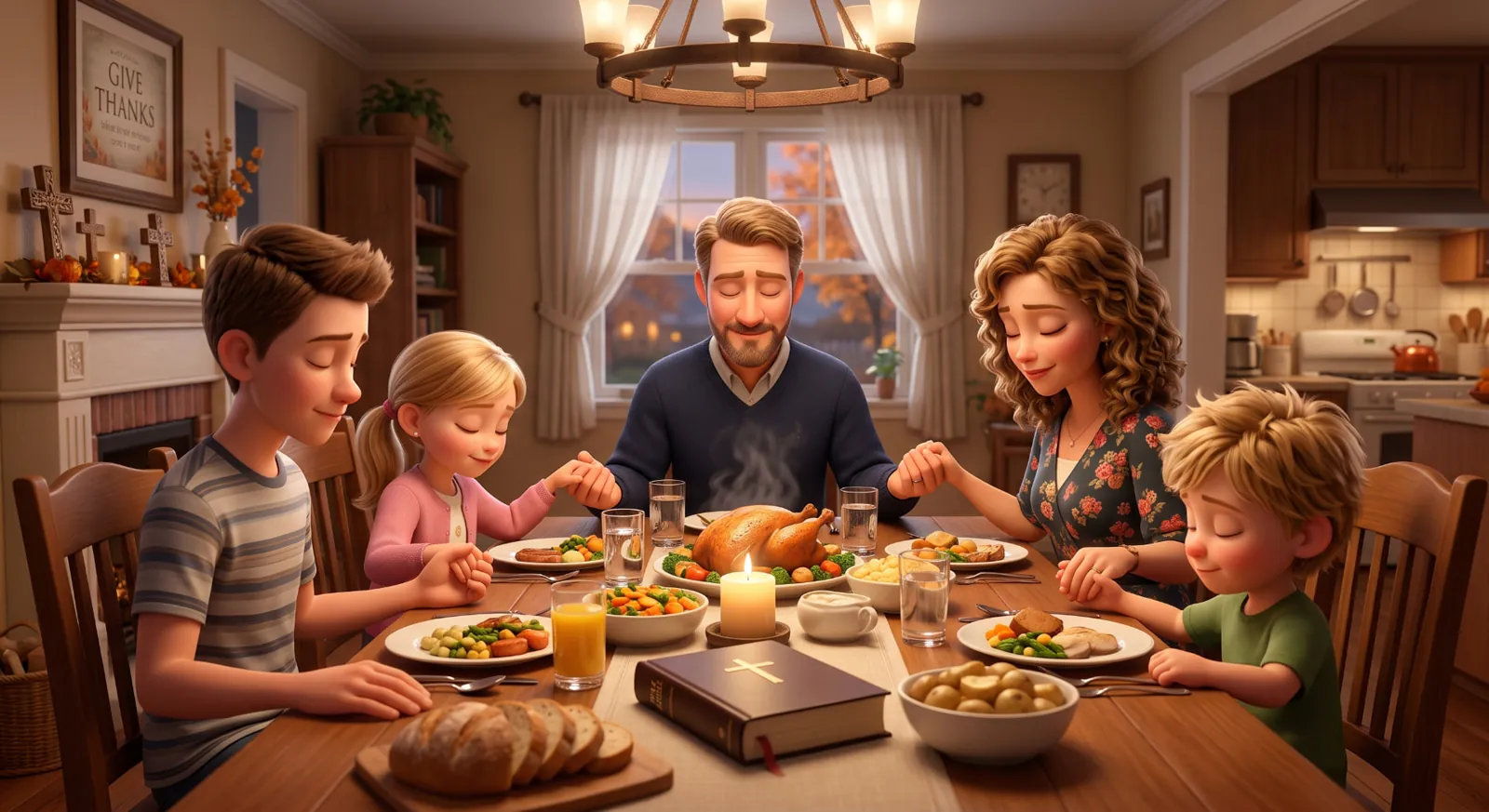
You've decided that tonight, before dinner, everyone will share one thing they're thankful for. It sounded lovely in your head. In practice, your four-year-old is thankful for "pasta, and also more pasta." Your seven-year-old is thankful that the dog didn't eat his homework "this time." Your partner is thankful for the ten minutes of quiet they had in the car. And the pasta is getting cold.
It's a little awkward and a little funny, and that's okay. Moments like this are where faith often takes root in family life. Not in perfect words, but in a habit of noticing good things together.
Faith lives in ordinary days
For many Christian families, faith isn't only what happens on Sunday. It's in how we treat each other on Tuesday. It's the prayer before a meal, a kind word to a sibling, a visit to someone who's lonely, a story at bedtime, a song in the car.
Children learn a lot about faith by watching what adults do. If gratitude, kindness and forgiveness show up in everyday life, kids start to see them as part of who your family is. That doesn't require a lesson plan. It asks for small, repeated moments.
Every tradition is a little different
Christian families are wonderfully varied. Traditions differ in how they pray, which translation of the Bible they read, how they celebrate seasons and what they emphasise. Some families love lively worship songs; others prefer quiet liturgy. Some read a children's Bible every night; others focus on stories told aloud.
You know your family's tradition best, and you're the one to explain what your family believes. Your church community, pastor, priest or children's minister can be wonderful partners too. Any resource you use, including Nookly, should follow your family's lead, not replace it.
Gratitude at the table
Back to the pasta. A gratitude habit works best when it's light and doable. One thing each, no pressure for deep answers. "Pasta" counts. So does "the dog." Over time, answers often grow: "I'm thankful Grandma felt better today." "I'm thankful my friend shared her crayons."
You can add variety with little prompts. Something that made you laugh. Someone who helped you. Something beautiful you saw. If your family prays before meals, gratitude can flow naturally into that prayer, in words that feel right for your tradition.
Some families keep a gratitude jar. Each person drops in a note, a drawing or a word, and on a special day you read them all together. It's a lovely record of a season.
Image placeholder · Inline image
A child sharing a moment with a family member
A card for Mrs. Patel
Kindness is one of the clearest ways children can live out faith. Here's a small example. Your neighbor, Mrs. Patel, has been unwell and hasn't been out much. Your six-year-old notices her curtains have been closed for days. You suggest making a card.
Your child chooses the colors, draws a sunflower and a cat that looks suspiciously like your cat, and writes "Get well soon" with the S backwards. Then comes the brave part: walking next door and handing it over. Mrs. Patel's face lights up. Your child talks about it for a week.
Afterwards you might chat about it. How do you think she felt? How did you feel? In your family's words, you can connect it to what you believe about loving our neighbors. The act comes first. The conversation can follow.
Stories your family trusts
Bible stories are central to many families' faith learning, and choosing how to share them is your call. Many parents use a children's Bible or storybook their church recommends, or retell stories aloud in their own words. What matters is that the source is one your family trusts.
A gentle tip: when you use any story or activity, keep scripture itself coming from your chosen Bible or trusted resources, rather than from a paraphrase you're unsure about. Personalized activities can help children connect with a story's themes (courage, kindness, forgiveness), but the actual words of scripture are best taken from the source your family uses.
Songs can be a joyful part of this too. Many families sing at bedtime, in the car or while tidying up. A song your church uses, sung together while you wash up, can carry a lot of meaning without any explanation at all.
By age, roughly
Around two and three, keep it sensory and simple. A short prayer or song at bedtime. A picture book. Folding hands before a snack. Naming things we're thankful for: "Thank you for the sun! Thank you for the doggy!"
Around five and six, children love acting out stories, making cards and helping with small kindnesses. They'll ask lots of questions about God, heaven and why things happen. It's okay to say, "That's a big question. Let's think about it together," or "Let's ask our pastor."
Around eight and nine, kids can take on bigger acts of kindness, like helping with a church food drive, and start reflecting on what faith means to them. They may have doubts or tricky questions. Welcome them. Wondering is part of growing.
Remember, too, that faith learning at home doesn't have to be serious all the time. Laughter at the dinner table, a silly song, a slightly chaotic Nativity play in the living room: these are part of how children come to love their family's faith.
Where Nookly fits
Nookly is a tool for adults to create learning pieces around one child. For Christian families, that might be a gratitude game for the dinner table, a kindness challenge card, a short story about a child who helps a neighbor, or a song about thankfulness for bedtime. You decide the themes and the tone.
Nookly isn't a religious authority, so the passage and the teaching stay with you. Bring the passage and translation your family uses, ask for a child-friendly activity around it, and compare any quotation with your Bible before sharing. You review everything, adjust wording to your tradition and lead the conversation about belief.
You can make a single experience on demand, or set up a personalized learning plan called a Blueprint for an ongoing Goal, a finite plan, maybe a "kindness month" leading up to a family celebration.
If your child asks something you can't answer, that's a gift, not a problem. Wondering together is part of faith for many families.
A request you might write
"My six-year-old wants to help our neighbor who's been ill. Make a simple card-making activity with drawing prompts, a short story about a child who visits a lonely neighbor, and three questions we could talk about afterwards. Keep it warm and simple. I'll add our own prayer." Read it, adjust the words to fit your family, and gather the crayons.
Tonight at dinner
Try the gratitude round. One thing each, no wrong answers, pasta allowed. If it feels awkward, laugh about it. Try again tomorrow. The habit matters more than the words.
From the Neighborhood