Personalized Visual Schedules & Routines for Kids: A Parent's Guide
Turn daily routines into visual schedules your child can follow — mornings, bedtime, transitions, and more. Learn how personalized visual routines reduce stress and build independence for young children.


For many children, managing time and following routines can feel as confusing as solving a Rubik’s cube for the first time. One moment they’re playing, and the next, they’re being told it’s time for homework, often leading to meltdowns and resistance. But just like learning to tie their shoes or ride a bike, time management is a skill they can develop with the right tools.
That’s where Visual Schedules and First-Then Boards come in. These simple yet effective tools transform daily routines from chaotic to structured, making transitions smoother, reducing anxiety, and helping kids feel more in control. Instead of constant reminders and power struggles, kids get a clear, predictable, and fun roadmap that guides them from their morning routine through bedtime day without frustration.
With Nookly, you can take these tools a step further by personalizing them to fit each child’s unique needs. From tailoring tasks to including images that feature the child, these customized schedules make routines more engaging and effective. Let’s explore how Visual Schedules and First-Then Boards support children at home, in classrooms, and beyond, and how Nookly makes them even more impactful!
What are Visual Schedules?
Visual schedules are step-by-step guides that use pictures, words, or both to help kids understand what’s coming next. Think of them as to-do lists, but ones that actually make routines easier and more engaging for children. Instead of constant “gentle” reminders that can lead to meltdowns, visual schedules provide a clear structure that kids can follow on their own or with the guidance of an adult. Some visual schedules, like the ones you can create with Nookly’s Visual Schedule Builder, can also include checkboxes or movable pieces, making task completion feel more like a small win rather than a chore.

Why Do Visual Schedules Work So Well?
There’s a reason why parents, educators, and therapists love visual schedules, and it’s because they work like magic—and there’s evidence to back it up. Sequencing visual activities for preschoolers and young children help build independence, feel more confident, and navigate daily routines with ease. They provide clarity, reduce anxiety, and make transitions smoother, creating a sense of stability during early childhood.
According to the ChildCare Education Institute and HeadStart, routines support cognitive development by embedding basic organizational skills and time management from an early age. This structured approach helps children focus, enhancing engagement and making learning more effective.
Visual schedules for early childhood are so effective because they also:
-
Create predictability – When kids know what’s coming next, they feel more in control and less overwhelmed.
-
Help kids stay focused – Clear steps make it easier to follow through without distractions.
-
Build independence – Instead of constant reminders, kids learn and are excited to complete tasks on their own.
-
Make transitions smoother – Moving from one activity to another (like from playtime to homework) becomes less of a battle.
-
Boost confidence – Checking off completed tasks gives kids a sense of progress and achievement.
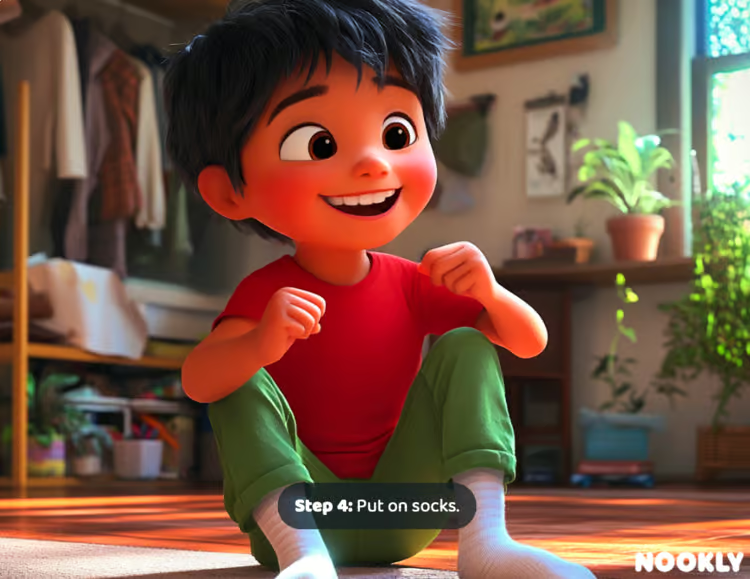
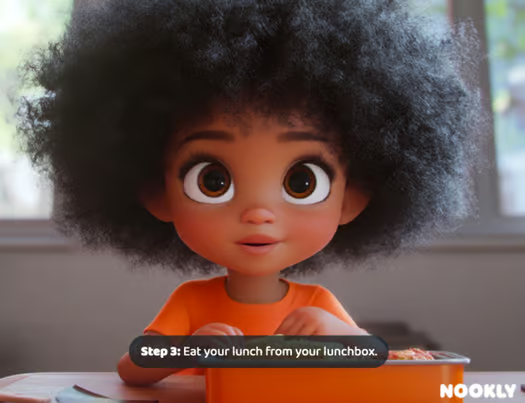
A simple morning routine visual schedule might look like this:
-
Wake up
-
Brush teeth
-
Get dressed
-
Eat breakfast
-
Pack school bag
-
Leave for school

Personalizing Visual Schedules for Children
While any visual schedule can help, customization is what makes them truly effective. When a schedule reflects a child’s unique routine and interests, it becomes far more engaging and easier to follow.
With Nookly’s visual schedule maker, you can:
-
Include a cartoon version of your child to make the schedule feel personal and fun.
-
Tailor tasks to their exact routine, ensuring it reflects their own daily life.
-
Choose between interactive and printable versions, depending on what works best for them.
-
Let kids participate in creating and tracking their schedule, helping them feel more in control and motivated.
Here’s a step-by-step guide on how to create personalized and printable visual schedules for children 👇
What is a First-Then Board?
If a visual schedule is the full game plan, a First-Then Board is the quick, easy strategy that makes transitions way smoother. It’s a simple tool that helps kids move from one activity to the next with less resistance. The idea is straightforward: first do something necessary, then get something motivating.
For example:
-
First: Eat three bites of veggies → Then: Get a small dessert
-
First: Finish 15 minutes of reading → Then: Play on the tablet for 10 minutes
-
First: Brush your teeth → Then: Enjoy a bedtime story

It’s a simple way to make everyday tasks feel more manageable for kids and a great way to avoid constant battles over things like turning off the TV or finishing homework.
Why First-Then Boards Work So Well
First-Then Boards are incredibly effective because they help kids understand expectations and stay motivated. They work particularly well for children who benefit from structure, including those with ADHD or autism, by providing clear, short-term goals they can easily follow.
First-then boards are so helpful for children because they:
-
Break tasks into smaller steps – "Clean your room" can feel overwhelming, but "Pick up your toys, then get a sticker" is much more manageable.
-
Increase motivation – A small, meaningful reward can turn even the least exciting task into something doable.
-
Help with impulse control – Kids learn patience by seeing that effort leads to something they enjoy.
-
Reduce transition struggles – Switching activities becomes easier when there’s a clear next step.
-
Reinforce natural consequences – Kids start to understand that completing tasks leads to positive outcomes.
How to Use First-Then Boards Effectively
-
Start simple – Keep it basic at first to help your child get used to the idea.
-
Stay consistent – The more often kids use it, the more natural it becomes.
-
Pick meaningful rewards – Small but motivating incentives work best (no need for a big reward every time).

With a first-then board, everyday transitions become smoother, motivation increases, and kids develop a stronger sense of independence, all without constant reminders or negotiations. If you’re looking to create fully customizable and printable first-then boards for kids, from waiting in line to sitting down, here’s a detailed walk-through 👇
How to Use These Tools at Home and in the Classroom
Both Visual Schedules and First-Then Boards can be used in a variety of settings:
-
At home: Guide morning routines, after-school activities, and bedtime more smoothly.
-
In the classroom: Help students stay on track and minimize disruptions.
-
In therapy sessions: Provide structured learning that feels engaging and predictable.
-
On the go: Use both tools to manage travel, errands, or unexpected changes.
Why Personalization Matters
No two kids are the same, which is why a one-size-fits-all approach doesn’t work when it comes to routines. Customizing visual schedules and first-then boards using Nookly makes them far more effective by:
-
Adapting to different learning styles – Some children need detailed step-by-step instructions, while others benefit from a simple overview.
-
Allowing for real-time updates – Schedules can be adjusted instantly to fit changing needs or updates to routines.
-
Encouraging interaction – Kids are more likely to follow a schedule they see themselves in and can actively interact with.

When children see themselves reflected in their schedules, whether through personalized visuals, familiar routines, or meaningful rewards, they’re more motivated, more engaged, and more successful in managing their day!
If you’re looking to create visual schedules or first-then boards from scratch or with ready-made templates, you can do so for free by signing up to Nookly: https://www.nookly.com/
Examples of Printable Visual Schedules You Can Create on Nookly
Morning Routine Visual Schedule for Kids – A guide for waking up, brushing teeth, getting dressed, eating breakfast, and preparing for school.
Bedtime Routine Visual Schedule – Helps children follow a consistent nighttime routine, including brushing teeth, putting on pajamas, and reading a bedtime story.
After-School Routine Visual Schedule – Guides kids through snack time, homework, chores, and playtime before dinner.
Daily Visual Schedule for Preschoolers – A simple, illustrated schedule for young children that includes playtime, snack time, storytime, and nap time.
Chore Chart Visual Schedule for Kids – A structured way to help kids complete daily responsibilities like making their bed, putting away toys, and setting the table.
Autism Visual Schedule for Daily Routines – A predictable and structured schedule for a day at home designed for children with autism to ease transitions and reduce anxiety.
Classroom Visual Schedule for Teachers – Helps students follow the school day with clear, visual cues for activities like morning circle, reading time, recess, and lunch.
Travel Visual Schedule for Kids – A step-by-step guide to help children prepare for a trip, from packing their bags to getting in the car or boarding a plane.
Examples of Printable First-Then Boards You Can Create on Nookly
First-Then Board for Morning Routines – First: Brush your teeth. Then: Go to the park. - Free Template
First-Then Board for Potty Training – First: Use the potty. Then: Get a sticker or small reward.
First-Then Board for Homework Motivation – First: Complete 20 minutes of homework. Then: Watch 10 minutes of TV.
First-Then Board for Screen Time Limits – First: Finish all chores. Then: Play on the tablet for 30 minutes.
First-Then Board for Kids with Autism – First: Complete a sensory-friendly task. Then: Get a preferred activity (like playing with a fidget toy).
First-Then Board for Managing Transitions – First: Finish clean up. Then: Go outside to play. - Free Template
First-Then Board for Encouraging Healthy Eating – First: Eat three bites of vegetables. Then: Get a small treat. - Free Template
First-Then Board for School Day – First: Go to School. Then: Get a sticker. - Free template
First-Then Board for a Day Out – First: Help parents run errands. Then: Go to the movies. - Free Template